
I THINK, THEREFORE I AM UNTOUCHABLE
- Jun 18
- 3 min read
A discussion titled "TVK Support: How Did the Shift Happen?" took place on Puthiya Thalaimurai’s Open Talk program. The regrettable state of Tamil journalism was evident here as well.
The questions posed by the journalists revolved entirely around the narrative of a "conspiracy by alliance parties against the DMK." The core theme was whether the DMK was being isolated; one person even asked this question directly at the end. The narrative they sought to construct was that the Viduthalai Chiruthaigal (VCK) had spearheaded this move to isolate the DMK. Thiruma openly condemned this allegation during the discussion.
Amidst this entire atmosphere, Thirumavalavan’s speech offered a ray of hope. In the final three or four minutes, he specifically highlighted the new shift emerging among Tamil Nadu's voters, urging us to recognize this as the true change. Yet, the unfortunate reality is that neither other party leaders nor the journalists took note of it.
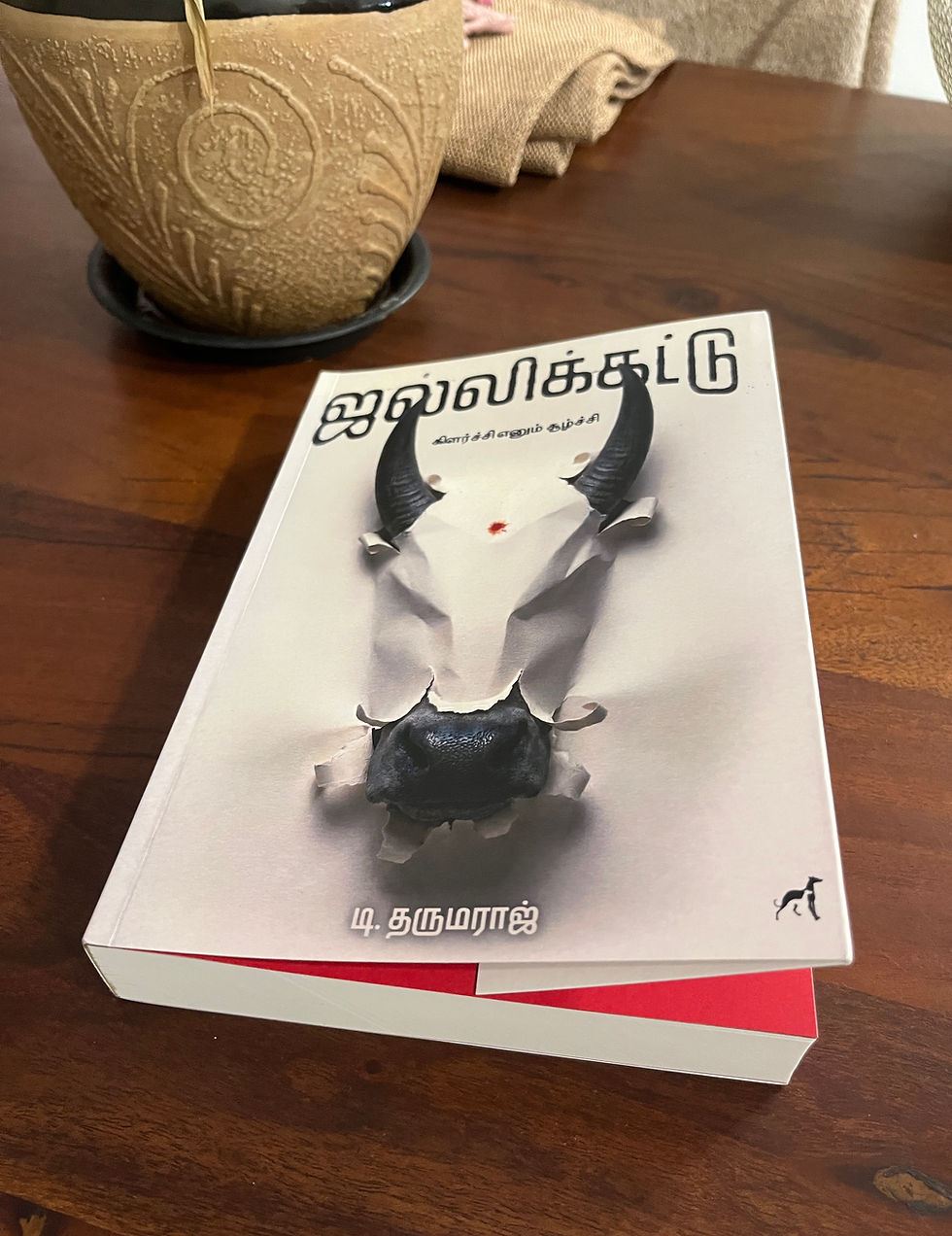
His brief address framed the change occurring in Tamil Nadu as part of a global phenomenon. He asked for this to be compared with the popular uprisings that have taken place across various parts of the world over the last twenty years. Personally, I was pleased that he identified the 2017 Jallikattu protests as a precursor to this trend.
When he spoke about facing a populace that is indifferent to ideology, unconcerned with policy convictions, and lacking awareness of social issues, no one spoke up, either in support or in opposition. Notably, when he mentioned that intellectuals characterize this shift as a post-modern political condition, everyone simply glossed over it. The slogan of change raised in this election does not merely signify a change in government; The premise of my book on Jallikattu is that this phenomenon should be viewed as a form of bio of the Gen Z voters, effectively declaring, I have changed!
It is a law of nature that political parties and organizations failing to grasp this shift, and to tailor their political activities accordingly, will eventually fade into oblivion. Tamil Nadu’s political parties, having been slow to comprehend this transformation, are responding in ways that align with their inherent natures.
Age-old parties like the DMK are attempting to adopt the guise of youthfulness. This is a failed ‘masquerade model’, reminiscent of the time when many tried to emulate MGR, believing that simply mimicking his persona would secure them power. There are numerous examples of such attempts, including M.K. Muthu, S.S. Rajendran, Nanjil Manoharan, Bhagyaraj, and Sathyaraj.
Communist parties appear to have adopted a policy of educating the people onto the right path. They possess a century-old agenda focused on cultural refinement, ideological education, and raising awareness. Yet, they have not shed the habit of viewing the public merely as a herd.
Thirdly, the distinct voice of Thirumavalavan advocates for a more rigorous analysis of this shift, positing that understanding the people is the essential starting point. History shows that this intellectual perspective is often dismissed, kept at arm's length, simply because it is labeled as a ‘Dalit voice’.
Yet, persisting in this line of thought and discourse, despite knowing this reality, defines the essence of Dalit activism in Tamil Nadu.
Here, 'Dalit' does not mean someone considered untouchable by birth; it means someone considered untouchable because of how they think!
I think, therefore, I am untouchable!


Comments